
Introduction
In today’s automation-driven world, reliability is everything. From industrial machinery and power distribution systems to HVAC controls and renewable energy installations, the Electromechanical relay remains a critical component for safe and efficient switching. Despite advancements in solid-state technologies, electromechanical relays continue to be widely used because of their excellent electrical isolation, cost-effectiveness, and proven performance.
According to 2026 industry estimates, the global industrial relay market is valued at over USD 11 billion, with electromechanical relays accounting for nearly 32% of market demand. As industries increasingly adopt automation, maintaining relay health has become more important than ever.
However, relays are mechanical devices with moving parts that wear out over time. Identifying early warning signs can help prevent costly downtime, equipment damage, and unexpected failures.
Understanding the Electromechanical Relay Working Principle
Before identifying replacement indicators, it helps to understand the Electromechanical relay working principle.
An electromechanical relay operates by energizing a coil that creates a magnetic field. This magnetic force moves an armature, causing electrical contacts to open or close and control another circuit. Because this process involves physical movement, relay components experience gradual wear during their operational life.
Common factors affecting relay lifespan include:
- Contact erosion
- Mechanical fatigue
- Coil degradation
- Electrical arcing
- Environmental contamination
Why Relay Maintenance Matters in 2026
The rapid growth of industrial automation is increasing the demand for reliable switching components. Recent market research indicates that industrial automation contributes more than 40% of global relay demand, making relay reliability a critical factor in operational efficiency.
Industrial Relay Market Snapshot (2026)
| Metric | Latest Data |
| Global Industrial Relay Market | USD 11.3 Billion |
| Electromechanical Relay Market Share | 32.2% |
| Industrial Automation Demand Share | 41.2% |
| Expected Market CAGR | 6.5% |
Proactive replacement strategies help organizations reduce maintenance costs and avoid unexpected equipment failures.
1. Frequent Contact Chattering
Contact chattering occurs when relay contacts repeatedly open and close instead of switching smoothly.
This issue is often caused by:
- Coil deterioration
- Voltage fluctuations
- Mechanical wear
- Internal contamination
Besides creating noise, chattering accelerates contact wear and increases electrical arcing. If the issue persists after troubleshooting, relay replacement is recommended.
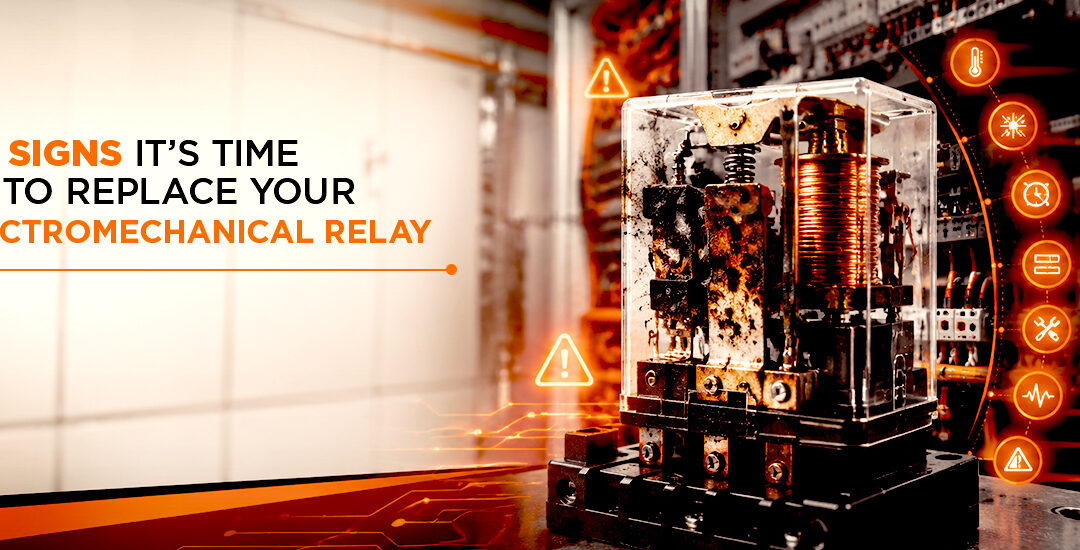
2. Visible Contact Wear and Burn Marks
One of the most obvious signs of relay deterioration is visible contact damage.
Watch for:
- Pitting
- Oxidation
- Burn marks
- Carbon deposits
- Contact welding
Electrical arcing gradually damages contact surfaces and increases resistance, reducing switching efficiency.
Contact Wear Severity
| Condition | Risk Level |
| Minor Discoloration | Low |
| Light Pitting | Medium |
| Heavy Pitting | High |
| Burnt Contacts | Critical |
3. Excessive Heat Generation
Heat is one of the leading causes of relay failure.
When relays operate above recommended temperatures, they experience:
- Coil insulation breakdown
- Contact oxidation
- Spring fatigue
- Reduced operational life
Technicians should investigate relays that consistently feel hot or show visible discoloration around terminals and housings.
4. Delayed Switching Performance
A healthy relay responds almost instantly when energized.
If you notice:
- Slow activation
- Delayed release
- Inconsistent response times
- Intermittent switching
the relay may be approaching the end of its service life. Delayed switching can negatively impact automated production systems where timing accuracy is critical.
5. Unusual Clicking or Operating Noise
Electromechanical relays naturally produce a clicking sound. However, louder-than-normal or irregular noises may indicate internal wear.
Possible causes include:
- Loose armatures
- Mechanical misalignment
- Coil damage
- Worn internal components
Many predictive maintenance programs now use acoustic monitoring to detect these warning signs before failures occur.
6. Abnormal Electrical Test Results
Routine maintenance testing can reveal hidden relay issues.
Key Tests
| Test Type | Warning Indicator |
| Coil Resistance | Significant deviation from specification |
| Contact Resistance | Continuous increase |
| Insulation Test | Failed insulation values |
Unexpected resistance changes often indicate contact degradation, contamination, or coil deterioration.
7. The Relay Has Reached Its Rated Lifecycle
Every relay is designed with specific mechanical and electrical life ratings.
Typical Relay Lifespan
| Parameter | Typical Range |
| Mechanical Life | 1–20 Million Operations |
| Electrical Life | 100,000–500,000 Operations |
| Recommended Replacement Point | 80–90% of Rated Life |
Even if a relay appears functional, operating beyond its rated lifecycle significantly increases the risk of unexpected failure.
Electromechanical Relay Applications Where Reliability Is Critical
Many Electromechanical relay applications are mission-critical and cannot tolerate unexpected failures.
These include:
- Industrial automation systems
- PLC control panels
- Motor control circuits
- HVAC equipment
- Renewable energy systems
- Automotive electronics
- Power distribution networks
- Railway signaling systems
In such environments, a single failed relay can disrupt operations and increase maintenance costs.
Why Industries Choose Leone Relay
As industries continue investing in automation, the need for reliable switching solutions continues to grow. Leone Relay delivers high-performance electromechanical relays engineered for durability, consistent operation, and long service life. Through rigorous quality control and advanced manufacturing processes, Leone Relay helps customers improve uptime, enhance safety, and maintain operational efficiency across demanding applications.
Conclusion
Recognizing relay wear before failure occurs is essential for maintaining reliable electrical systems.
Key Takeaways
- Contact chattering often indicates internal deterioration.
- Burnt or pitted contacts are signs of electrical wear.
- Excessive heat accelerates relay aging.
- Delayed switching impacts system performance.
- Unusual noise may indicate mechanical problems.
- Electrical testing helps identify hidden faults.
- Relays nearing end-of-life should be replaced proactively.
- High-quality solutions from Leone Relay support long-term reliability.
By monitoring these warning signs and implementing preventive maintenance, businesses can maximize the performance, safety, and lifespan of every Electromechanical relay in their systems.
 English
 Afrikaans
 Albanian
 Amharic
 Arabic
 Armenian
 Azerbaijani
 Basque
 Belarusian
 Bengali
 Bosnian
 Bulgarian
 Catalan
 Cebuano
 Chichewa
 Chinese (Simplified)
 Chinese (Traditional)
 Corsican
 Croatian
 Czech
Czech Danish
 Dutch
Dutch Esperanto
 Estonian
 Filipino
 Finnish
 French
 Frisian
 Galician
 Georgian
 German
 Greek
Greek Gujarati
 Haitian Creole
 Hausa
Hausa Hawaiian
 Hebrew
 Hindi
Hindi Hmong
Hmong Hungarian
 Icelandic
 Igbo
Igbo Indonesian
 Irish
Irish Italian
 Japanese
 Javanese
 Kannada
 Kazakh
 Khmer
Khmer Korean
 Kurdish (Kurmanji)
 Kyrgyz
 Lao
Lao Latin
Latin Latvian
 Lithuanian
 Luxembourgish
 Macedonian
 Malagasy
 Malay
Malay Malayalam
 Maltese
 Maori
Maori Marathi
 Mongolian
 Myanmar (Burmese)
 Nepali
 Norwegian
 Pashto
 Persian
 Polish
 Portuguese
 Punjabi
 Romanian
 Russian
 Samoan
 Scottish Gaelic
 Serbian
 Sesotho
 Shona
Shona Sindhi
 Sinhala
 Slovak
 Slovenian
 Somali
 Spanish
 Sudanese
 Swahili
 Swedish
 Tajik
Tajik Tamil
Tamil Telugu
 Thai
Thai Turkish
 Ukrainian
 Urdu
Urdu Uzbek
Uzbek Vietnamese
 Welsh
Welsh Xhosa
Xhosa Yiddish
 Yoruba
 Zulu
Zulu