
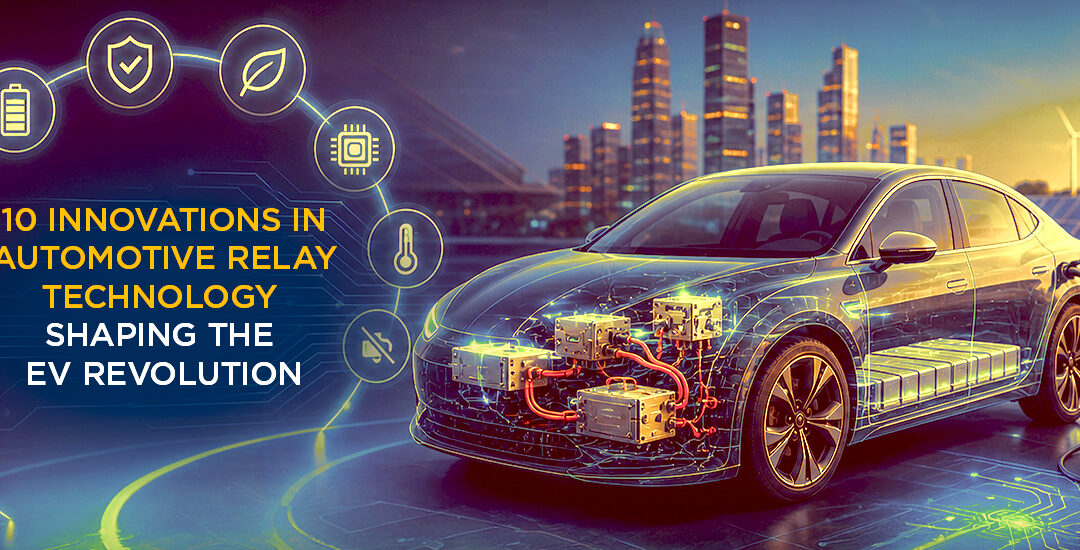
The global electric vehicle market is no longer a future prediction; it is today’s industrial transformation. According to the International Energy Agency (IEA), global EV sales crossed 17 million units in 2025, accounting for nearly 23% of all new car sales worldwide. Meanwhile, BloombergNEF projected in January 2026 that EV demand will continue accelerating due to stricter emission regulations, battery cost reductions, and rapid charging infrastructure expansion.
Amid this revolution, one component quietly powering the transition is the Automotive Relay. From battery management systems to charging safety and thermal control, advanced relay technologies are becoming critical for modern EV architecture.
For brands like Leone Relays, innovation in automotive relay engineering is becoming essential to support safer, faster, and more energy-efficient EV systems.
Why Automotive Relay Technology Matters More in EVs
Unlike traditional internal combustion vehicles, EVs rely heavily on high-voltage electrical systems. Modern electric cars contain thousands of switching operations daily involving:
- Battery disconnect systems
- Charging circuits
- Power distribution units
- HVAC systems
- ADAS modules
- DC-DC converters
- Inverters and motor controllers
A 2025 McKinsey automotive electronics survey estimated that electronics now account for nearly 45% of total EV manufacturing costs, compared to about 18–20% in conventional vehicles. This massive electronic dependency increases the importance of reliable Automotive Relay systems.
1. High-Voltage Automotive Relay Systems for EV Batteries
One of the biggest innovations is the rise of high-voltage relays capable of handling 400V to 1000V EV architectures.
With ultra-fast charging becoming mainstream in 2025 and 2026, relay systems must safely isolate high-current battery packs during faults, overheating, or collisions.
According to a February 2026 report from MarketsandMarkets, the global high-voltage relay market for EVs is projected to grow at a CAGR of over 18% through 2030 due to next-generation EV platforms.
Modern high-voltage Automotive Relay designs now feature:
- Arc suppression technology
- Ceramic insulation chambers
- Magnetic blowout mechanisms
- Faster switching cycles
These innovations drastically improve electrical safety.
2. Smart Automotive Relay Integration with AI Diagnostics
Artificial Intelligence is entering automotive electronics rapidly.
Advanced relay modules now integrate:
- Predictive diagnostics
- Real-time switching analysis
- Failure prediction algorithms
- CAN bus communication systems
In 2025, several EV manufacturers began deploying intelligent relay monitoring systems that reduce unexpected electrical failures by nearly 30%, according to a Deloitte mobility report.
These smart Automotive Relay solutions help fleet operators minimize downtime and improve vehicle reliability.
3. Miniaturized Relay Designs Supporting Compact EV Platforms
Modern EV manufacturers are under pressure to reduce weight and optimize cabin space.
Relay manufacturers are responding with:
- Ultra-compact PCB relays
- Surface-mount relay modules
- Lightweight electromagnetic switching systems
A 2026 IEEE automotive electronics paper revealed that reducing relay module weight by even 15% can improve overall EV energy efficiency by nearly 2–3%.
Compact Automotive Relay systems also simplify modular EV platform design.
4. Solid-State Relay Technology Replacing Conventional Switching
Solid-state relays (SSRs) are becoming a major breakthrough in EV power electronics.
Unlike electromechanical relays, SSRs offer:
- Faster switching
- Zero mechanical wear
- Reduced noise
- Longer lifecycle performance
By late 2025, several premium EV brands started adopting hybrid solid-state Automotive Relay systems for battery management and regenerative braking applications.
Research from Frost & Sullivan estimates that solid-state switching adoption in EVs may rise by 40% before 2028.
5. Automotive Relay Innovations Improving Thermal Management
EV heat management has become a major engineering challenge.
Battery packs, power electronics, and charging modules generate significant heat during operation. New relay systems now include:
- Heat-resistant polymers
- Enhanced thermal dissipation coatings
- Temperature-adaptive switching mechanisms
A January 2026 automotive electronics study found that optimized thermal relay management can improve EV battery lifespan by nearly 12%.
This directly impacts vehicle durability and long-term ownership costs.
6. Waterproof and Dustproof Automotive Relay Systems
Electric vehicles increasingly operate in diverse environmental conditions.
Modern Automotive Relay designs now achieve:
- IP67 and IP68 protection ratings
- Moisture-resistant encapsulation
- Corrosion-resistant terminals
These features are especially critical for:
- Electric SUVs
- Commercial EV fleets
- Off-road electric mobility platforms
In regions with extreme humidity or temperature fluctuations, rugged relay systems significantly improve operational reliability.
7. Fast-Charging Relay Technology for Ultra-Quick EV Charging
The expansion of 350kW ultra-fast charging infrastructure is pushing relay technology further.
Fast-charging systems demand:
- High-speed switching
- Arc-free disconnection
- High thermal endurance
According to the IEA’s 2026 EV Infrastructure Outlook, public fast chargers globally increased by over 35% in 2025 alone.
To support this ecosystem, Automotive Relay manufacturers are engineering high-endurance relay contacts capable of handling repeated rapid charging cycles without degradation.
8. Energy-Efficient Automotive Relay Coils Reducing Power Loss
Traditional relays consume continuous coil power.
New-generation Automotive Relay systems now use:
- Low-power magnetic latching mechanisms
- Energy-efficient coil architectures
- Pulse-triggered switching designs
These innovations reduce parasitic energy consumption a critical factor in maximizing EV driving range.
Some 2026 relay prototypes reportedly reduced standby energy consumption by nearly 50% compared to older relay platforms.
9. Advanced Safety Relay Systems for Autonomous EVs
As autonomous driving technologies evolve, relay systems are becoming safety-critical components.
ADAS-equipped EVs require:
- Redundant switching systems
- Fail-safe relay mechanisms
- Instant emergency power isolation
A 2025 automotive cybersecurity report by Capgemini highlighted that electrical redundancy systems will become mandatory in many Level-4 autonomous vehicles by the end of the decade.
This creates major demand for intelligent Automotive Relay safety architectures.
10. Sustainable Automotive Relay Manufacturing Practices
Sustainability is influencing every layer of EV manufacturing including relay production.
Leading manufacturers now focus on:
- RoHS-compliant materials
- Lead-free soldering
- Recyclable relay components
- Low-carbon production facilities
According to a 2026 global sustainability manufacturing survey, over 68% of automotive OEMs prefer suppliers with environmentally compliant electronic component production processes.
This shift is encouraging relay manufacturers like Leone Relays to align innovation with sustainability goals.
How Leone Relays Supports the Future of EV Mobility
As EV systems become smarter and more electrified, the demand for durable and high-performance Automotive Relay solutions will continue growing.
Leone Relays focuses on delivering advanced relay technologies engineered for:
- High electrical endurance
- Reliable switching performance
- Thermal stability
- Compact integration
- Automotive-grade safety standards
By adapting to evolving EV requirements, relay manufacturers play a direct role in enabling safer, smarter, and more efficient electric transportation systems.
Conclusion
The EV revolution is not driven by batteries alone it is powered by thousands of intelligent electrical decisions happening every second inside the vehicle. Advanced Automotive Relay technologies are becoming the invisible backbone of electric mobility by improving safety, charging efficiency, thermal management, and system intelligence.
Key Takeaways
- High-voltage Automotive Relay systems are essential for next-generation EV platforms
- Smart AI-enabled relays improve predictive maintenance and vehicle reliability
- Solid-state relays are transforming EV switching performance
- Fast-charging infrastructure growth is accelerating relay innovation
- Sustainable relay manufacturing is becoming a major automotive priority
- Leone Relays continues supporting the future of intelligent EV mobility with advanced relay solutions
 English
 Afrikaans
 Albanian
 Amharic
 Arabic
 Armenian
 Azerbaijani
 Basque
 Belarusian
 Bengali
 Bosnian
 Bulgarian
 Catalan
 Cebuano
 Chichewa
 Chinese (Simplified)
 Chinese (Traditional)
 Corsican
 Croatian
 Czech
Czech Danish
 Dutch
Dutch Esperanto
 Estonian
 Filipino
 Finnish
 French
 Frisian
 Galician
 Georgian
 German
 Greek
Greek Gujarati
 Haitian Creole
 Hausa
Hausa Hawaiian
 Hebrew
 Hindi
Hindi Hmong
Hmong Hungarian
 Icelandic
 Igbo
Igbo Indonesian
 Irish
Irish Italian
 Japanese
 Javanese
 Kannada
 Kazakh
 Khmer
Khmer Korean
 Kurdish (Kurmanji)
 Kyrgyz
 Lao
Lao Latin
Latin Latvian
 Lithuanian
 Luxembourgish
 Macedonian
 Malagasy
 Malay
Malay Malayalam
 Maltese
 Maori
Maori Marathi
 Mongolian
 Myanmar (Burmese)
 Nepali
 Norwegian
 Pashto
 Persian
 Polish
 Portuguese
 Punjabi
 Romanian
 Russian
 Samoan
 Scottish Gaelic
 Serbian
 Sesotho
 Shona
Shona Sindhi
 Sinhala
 Slovak
 Slovenian
 Somali
 Spanish
 Sudanese
 Swahili
 Swedish
 Tajik
Tajik Tamil
Tamil Telugu
 Thai
Thai Turkish
 Ukrainian
 Urdu
Urdu Uzbek
Uzbek Vietnamese
 Welsh
Welsh Xhosa
Xhosa Yiddish
 Yoruba
 Zulu
Zulu